


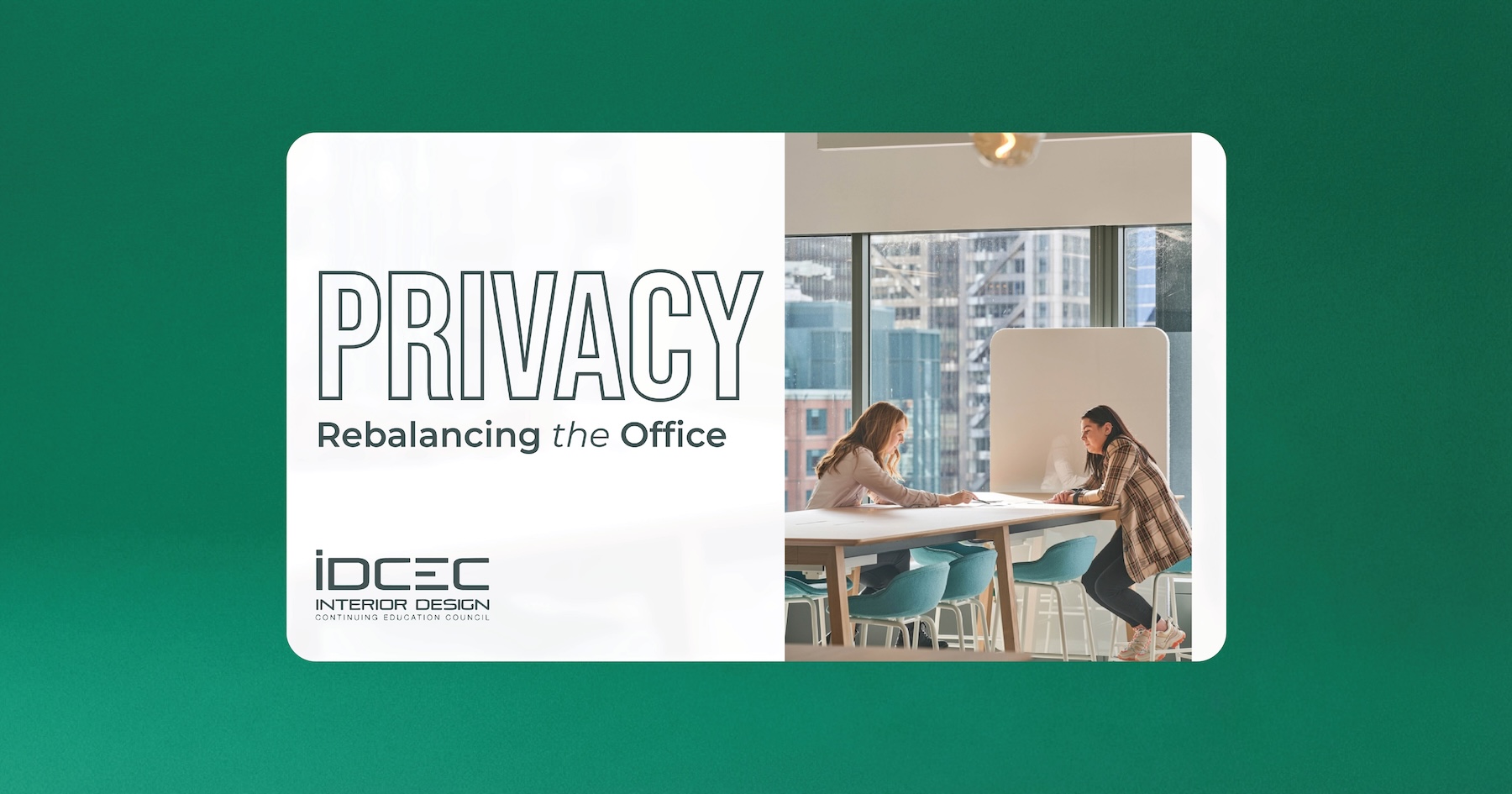
Why Workplace Privacy is the Ultimate Employee Perk
If you walked into your office today and felt a little overwhelmed by the noise, the lack of personal space, or the constant feeling of someone looking over your shoulder, you aren’t alone. In fact, 42% of employees say they would leave their current job for a company that simply offered more demonstrable privacy.
The Multimillion-Dollar Distraction Epidemic
Over the last few decades, the personal footprint of the average knowledge worker has drastically shrunk. In the 1990s, workers were allotted an average of 175 square feet of personal space; post-pandemic, that number has plummeted to just 52 square feet. Meanwhile, research from Gensler shows that 54% of a knowledge worker’s day is dedicated to focus-heavy tasks. Where are they supposed to get that deep work done when they are crammed together?
The financial toll of this spatial mismatch is staggering. Because it takes approximately 23 minutes to regain a “flow state” after being interrupted, the average worker is distracted for about 86 minutes (or 18% of their day) every single day. For an average 200-person company, that loss of focus translates to a massive $2.1 million loss in value every single year.
The Three-Legged Stool of Privacy
To solve this multimillion-dollar problem, designers and company leaders need to look beyond simply handing out noise-canceling headphones. True workplace privacy is actually a “three-legged stool,” and if one leg is missing or ignored, the office will still feel chaotic
1. Acoustic Privacy: Most people understand that the open office is loud—sometimes measuring closer in decibels to an interstate highway than a quiet hum. Fixing acoustic privacy requires the “ABCs”:
- Absorb: Using soft, fibrous materials like felt dividers or carpet to reduce sound reverberation (measured by an NRC rating).
- Block: Building physical barriers like drywall or freestanding pods to stop sound transmission entirely (measured by an STC rating).
- Cover: Utilizing active sound masking to lower “speech intelligibility.” This means you might hear a hum of noise, but you can’t make out the distracting words your coworkers are saying.
2. Visual Privacy: Visual privacy tackles two distinct but equally draining problems: visual noise and visual pressure. Visual noise is the constant distraction of movement in your peripheral vision. Visual pressure, however, is the uncomfortable sensation that someone is watching you or looking over your shoulder. When employees feel this pressure, they are demonstrably less focused, productive, and creative. Effective solutions can range from high-backed modular furniture enclosures to simple frosted films on glass conference room walls.
3. Territorial Privacy (Proxemics): Often the most overlooked aspect of design, this is the science of how comfortable we feel based on our proximity to others and the type of work we are doing. Think of walking into a coffee shop: you might sit in the middle of a bustling room to read a book, but you’ll naturally seek out a hidden corner chair if you need to do your taxes. When we force employees into 52-square-foot benching solutions, we destroy territorial privacy, which in turn amplifies both acoustic and visual stressors because everyone is simply too close.
Privacy Drives Engagement
At the end of the day, a well-designed office isn’t just about beautiful aesthetics, trendy amenity spaces, or looking good in a magazine. It’s about empowering people. Engaged employees—the ones who carry the company culture, hit their goals, and drive profitability—need to be able to focus. When companies give their teams the flexibility to choose where they work and provide them with just a simple door to close when they need it, engagement naturally skyrockets. By understanding the delicate balance of acoustic, visual, and territorial privacy, we can finally stop building spaces that distract us and start designing environments where we actually want to work.
Keep Learning, Earn CEU Credit
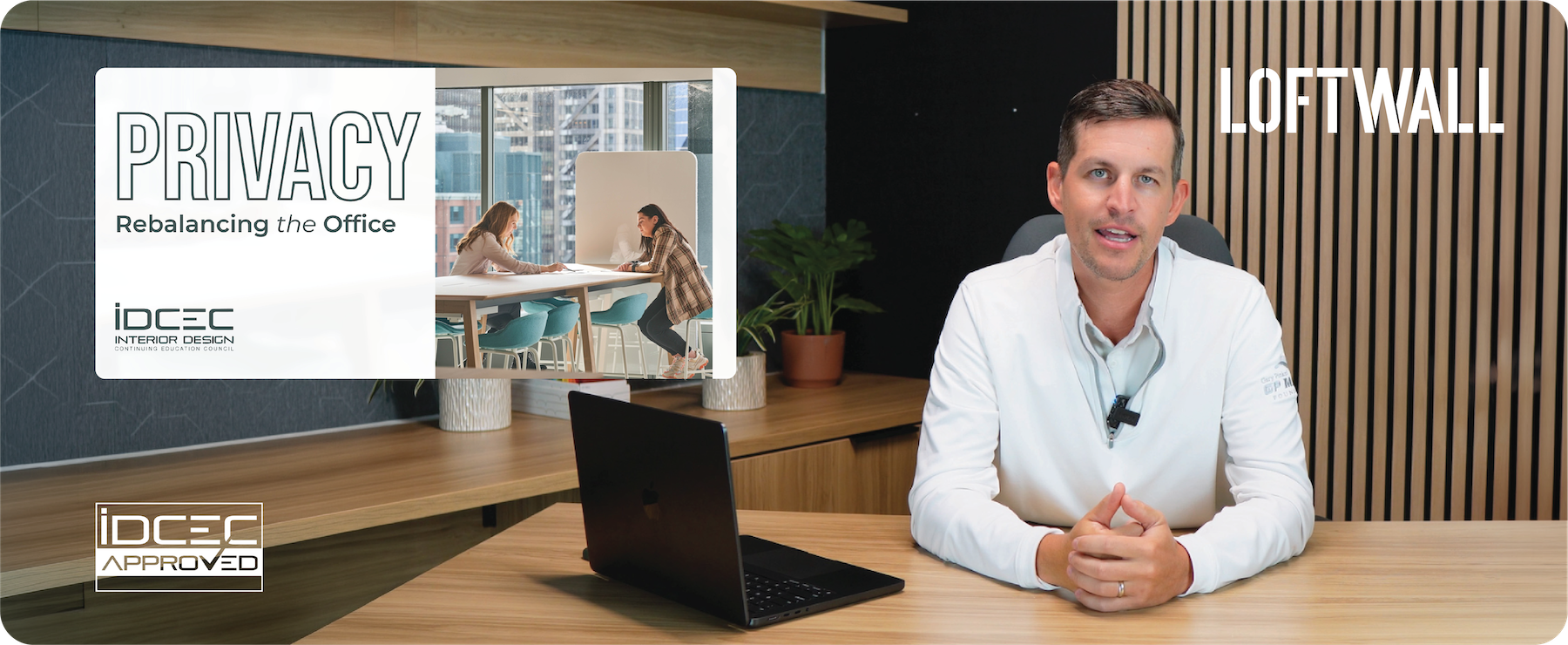
In Privacy: Re-balancing the Office, Bryce Stuckenschneider of Loftwall dives deep into the history, science, and financial impact of privacy in the modern workplace. It turns out that a lack of privacy isn’t just a minor annoyance—it is an active threat to employee engagement and a company’s bottom line.
 Profile
 Certificates
 My Courses
 Settings