


The Ultimate Guide to Fulton Market Design Days: Chicago’s Premier Design Festival
Every June, the design world descends upon Chicago. For decades, that meant one thing: NeoCon at the Merchandise Mart. But in recent years, a seismic shift has occurred just a few miles west. The historic, cobblestoned streets of the West Loop have given rise to a new, vibrant, and undeniably cool phenomenon: Fulton Market Design Days (FMDD).
What started as a grassroots collaboration has exploded into a full-blown design festival, offering a boutique, experiential counterpoint to the traditional trade show circuit. Whether you are an architect, an interior designer, a facility manager, or a design enthusiast, FMDD has become an unmissable stop on the global design calendar.
In this guide, we will explore the gritty history of the neighborhood, the origins of this blockbuster event, the standout highlights from the 2025 show, and everything you need to know to navigate the festivities like a pro.
From Meatpacking to Masterpieces: A Brief History of Fulton Market
To understand the unique energy of Fulton Market Design Days, one must first understand the ground upon which it stands. Fulton Market is not a manufactured convention center; it is a neighborhood with a soul, deeply rooted in Chicago’s industrial past.
In the 19th century, this area was known as Haymarket Square, a bustling produce market that fed the growing city. By the late 1800s, it had transformed into a meatpacking powerhouse. For nearly a century, millions of cattle and hogs were traded here annually, earning Chicago its moniker as “Hog Butcher for the World.” The streets were chaotic, noisy, and gritty—a far cry from the polished luxury of today.
The mid-20th century saw a decline as food distribution modernized and moved to the suburbs, leaving behind cavernous brick warehouses and empty lots. However, the neighborhood’s “good bones” did not go unnoticed. In the 1980s and 90s, a renaissance began. Artists colonized the vacant lofts, followed by visionaries like Oprah Winfrey, who planted her Harpo Studios flag in the area. Soon after, acclaimed restaurateurs opened influential dining spots on Randolph Street, sparking a culinary revolution.
By the 2010s, the transformation was cemented. Tech giants like Google and McDonald’s moved their global headquarters to the West Loop, bringing with them a wave of affluent professionals and creative energy. Today, those same historic meatpacking buildings—with their heavy timber beams and exposed brick—house the world’s most prestigious design showrooms. The neighborhood’s gritty-industrial past has seamlessly blended with modern luxury, creating a distinct aesthetic that serves as the perfect backdrop for Design Days.
The Origin Story: How Fulton Market Design Days Began
As the West Loop solidified its reputation as Chicago’s trendiest district, it became the natural home for forward-thinking furniture and design brands. However, for years, these showrooms operated in the shadow of the massive NeoCon event at the Mart.
Fulton Market Design Days was born out of a desire to change that narrative. It launched officially in 2023, but its roots lie in the “Neighborhood of Brands”—a collective formed in 2022 by over 35 design-led companies that had set up shop in the district. Their goal was simple yet ambitious: to showcase the area’s creative density and provide a more authentic way to experience design.
The inaugural event in June 2023 was a massive success, drawing an estimated 40,000+ visitors. It validated a theory that many in the industry had whispered for years: designers were craving connection and experience over badge-scanning and booth-hopping.
By the second annual FMDD in 2024, the event had gained unstoppable momentum. More iconic brands joined the roster, hosting open houses, product launches, and block parties. Major manufacturers began diverting significant resources to their Fulton Market showrooms, viewing FMDD not just as a side event, but as a primary vehicle for connecting with architects and designers.
Looking Ahead: Fulton Market Design Days 2026
If you are already marking your calendar for next year, you aren’t alone. Industry pros know that booking early is the key to a stress-free experience in Chicago during design week. Here is what we know so far about Fulton Market Design Days 2026.
2026 Dates & Schedule
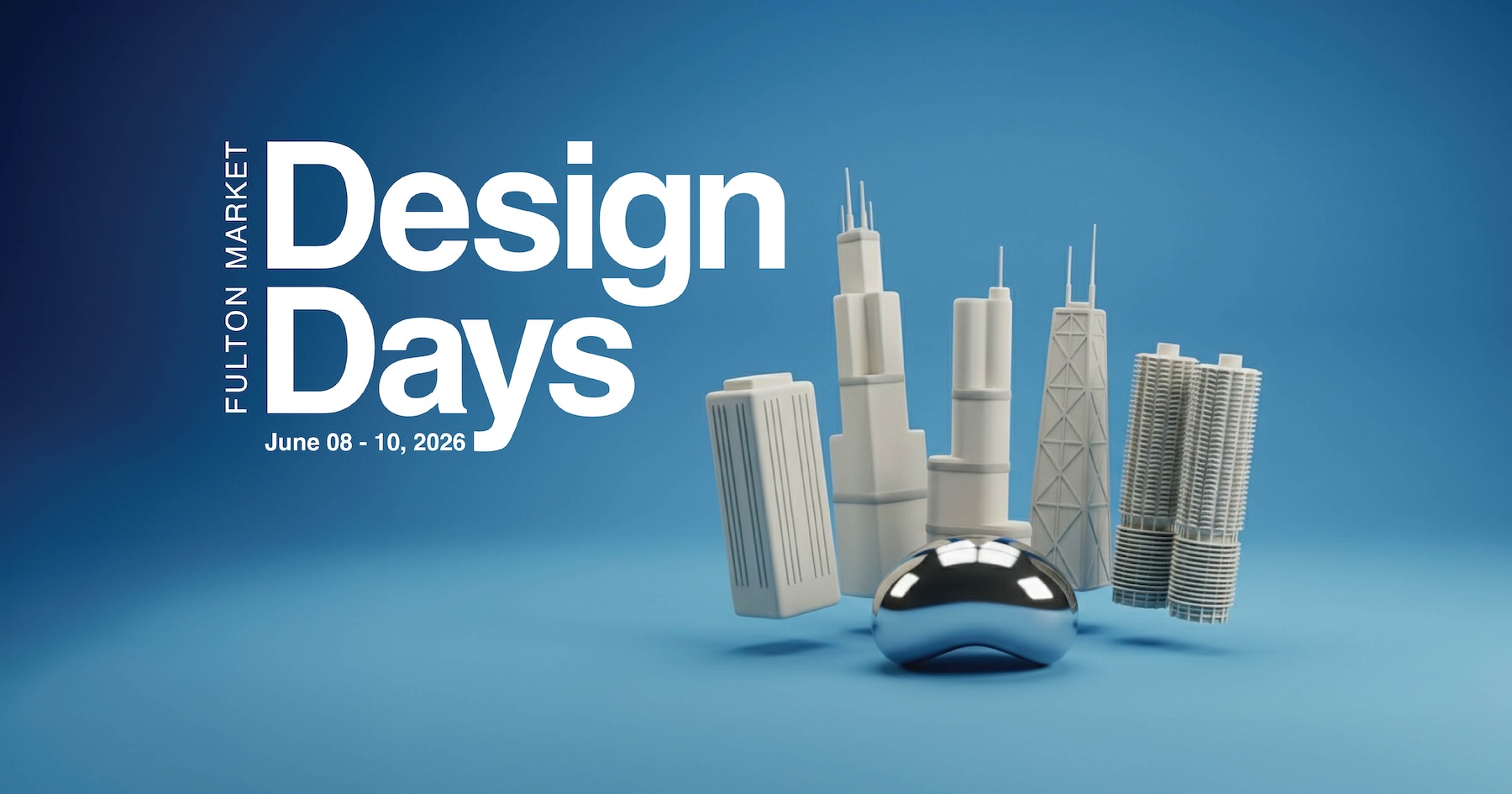
Fulton Market Design Days typically runs concurrently with NeoCon. With NeoCon officially confirmed for June 8–10, 2026, you can expect Fulton Market Design Days to align with these dates.
-
Dates: Monday, June 8 – Wednesday, June 10, 2026
-
Note: Many showrooms in Fulton Market often host “soft openings” or preview parties on the evening of Sunday, June 7, so arriving a day early is highly recommended to beat the Monday morning rush.
Where to Register
Unlike NeoCon, which requires a badge for entry into the Mart, Fulton Market is more open. However, registration is still required to access the shuttles, specific showroom parties, and to receive your official tote bag and map.
-
Registration Opens: January 1, 2026
-
Official Link: You will be able to register directly at FultonMarketDesignDays.com.
-
Pro Tip: Register early to get on the RSVP lists for the exclusive after-parties, which often fill up months in advance.
2026 Welcome Center Location
The central hub for the event is the Design Days Welcome Center. This is where you can pick up your printed map, get wristbands for events, and catch the free trolley to the Merchandise Mart.
-
Location: The corner of Fulton Market & Morgan Street (near The Emily Hotel).
-
Look for the bright pink banners and the large “Welcome” tent. This is the best place to start your day, grab a coffee, and meet up with your group before hitting the showrooms.
2025 Exhibitor Highlights: A Who’s Who of Design
By June 2025, Fulton Market Design Days had fully matured into an industry juggernaut. The streets were electric, filled with attendees moving between over 35 participating locations. The event featured a diverse mix of legacy furniture makers, textile innovators, and international challengers.
Here is a look at the key participants and the experiences that defined the 2025 event:
MillerKnoll:
The MillerKnoll collective (comprising Herman Miller, Knoll, Muuto, Maharam, and others) anchored the event with a massive presence. In 2025, they unveiled a spectacular flagship showroom spanning two buildings and 70,000 square feet at 1100 and 1144 West Fulton Market.
-
The Experience: This wasn’t just a showroom; it was a campus. The multi-level space brought Herman Miller and Knoll under one roof for the first time in Chicago.
-
The Highlight: They recreated the brand’s Michigan product testing lab as an interactive installation, allowing visitors to see the engineering rigor behind the furniture. It was a masterclass in brand storytelling.
Allsteel & Gunlocke:
As founding members of the “Neighborhood of Brands,” Allsteel and its partners (HBF, Normann Copenhagen) welcomed visitors into a sleek, collaborative environment.
-
The Vibe: Relaxed and relational. Unlike the frenetic energy of a trade show booth, the Allsteel showroom offered breathing room.
-
The Focus: They highlighted the “innovative spirit” of contract furniture, showcasing adaptable office solutions designed for the hybrid work era.
Kimball International:
The Kimball group (Kimball, National, Interwoven) focused heavily on the human element of design.
-
The Theme: Well-being and flexibility. Their showroom tours emphasized ergonomic seating and “resimercial” lounge areas.
-
The Draw: Hospitality. Known for their warm welcome, Kimball’s space was a favorite stop for refreshments and genuine conversation with product designers.
Teknion:
Canadian powerhouse Teknion, along with Studio TK and Luum Textiles, turned their space into a colorful journey through the “design ecosystem.”
-
New Debuts: 2025 saw the launch of vibrant architectural wall systems and ergonomic setups.
-
The Takeaway: Their presence underscored the international flavor of FMDD, proving that global brands view the West Loop as a critical market hub.
OFS:
Indiana-based OFS understands that the way to a designer’s heart is often through hospitality.
-
The Launch: They opened a brand-new showroom just in time for Design Days 2025.
-
The Buzz: The “Coffee + Firecakes” pop-up was a morning ritual for thousands of attendees. Serving local donuts and artisan coffee, OFS created a “third place” atmosphere that perfectly demonstrated their people-centric approach to office design.
Humanscale:
Humanscale used FMDD 2025 as a platform for major product news, bypassing the traditional NeoCon launch cycle.
-
The Product: They introduced the Diffrient Lounge chair, designed by the legendary Niels Diffrient.
-
The Mission: Beyond products, they highlighted sustainability milestones, aligning with the industry’s push for “innovation with purpose.”
Interface:
Carpet tile innovator Interface delivered one of the most creative experiences of the week, winning the IIDA Best Small Showroom award.
-
The Preview: They offered an exclusive sneak peek at “Stellar Horizons,” a space-themed collection launching later in the year.
-
The Installation: Visitors walked through immersive vignettes, including a mid-century modern set featuring the “Dressed Lines” collection. It was a prime example of experiential marketing—turning flooring into art.
Kvadrat:
Danish brand Kvadrat provided a sensory reset from the busy streets.
-
The Installation: A “textile forest” featuring collections by Giulio Ridolfo and Peter Saville.
-
The Feeling: Moody, artistic, and tactile. It felt more like a modern art gallery than a commercial showroom.
Creative Collaborations & Pop-Ups
The 2025 event was defined by inventive partnerships that blurred the lines between disciplines:
-
Brentano x esPattio: A textile studio and a furniture brand teamed up to install a “textile meets sculpture” exhibit inside a local restaurant. The display wrapped nature-inspired fabrics around modern forms, mixing design with dining.
-
Allermuir: Transformed into a daily club with a live DJ (Eliana) spinning tracks, turning a furniture display into a chic hangout spot.
-
After-Hours: Brands like Milliken and Bentley hosted evening lounges with cocktails and talks, proving that at FMDD, business hours are just a suggestion.
What Makes FMDD Different? Event Overview & Key Launches
Fulton Market Design Days is not a conventional trade show—it is a three-day neighborhood takeover. It transforms the West Loop into a playground of style, innovation, and commerce.
The “Street-Level” Experience
Unlike the Merchandise Mart, where you are contained within a single (albeit massive) Art Deco building, FMDD takes place on the street. Visitors walk from building to building, enjoying the fresh air, the architecture, and the city energy. The atmosphere is a blend of work and play: you might start your day reviewing task chairs, grab a taco from a food truck for lunch, and end the day at a rooftop party overlooking the skyline.
Launch Central
In 2025, it became clear that brands were no longer holding back their best releases for the Mart. Fulton Market was the epicenter of “what’s new.”
-
Strategic Timing: Companies like Sunon opened new US showrooms during the event, and Interface previewed collections months before release.
-
Real-World Context: The biggest advantage of FMDD is context. You don’t just see a chair on a pedestal; you see it in a fully realized office vignette, illuminated by natural light pouring through warehouse windows. You can touch the fabrics, sit in the lounges, and visualize how these products function in a real environment.
The Great Debate: Fulton Market Design Days vs. NeoCon
Comparison is inevitable. Both events occur in Chicago during the same week in June. Both target the commercial interiors industry. However, they offer fundamentally different experiences.
| Feature | NeoCon (The Merchandise Mart) | Fulton Market Design Days (West Loop) |
| Venue | A massive, singular building (4M+ sq ft). | A walkable neighborhood of distributed showrooms. |
| Atmosphere | Corporate, high-energy, structured, intense. | Boutique, relaxed, social, experiential. |
| Exhibitors | Hundreds of brands, from giants to startups. | A curated collection of ~40+ design-led brands. |
| Focus | Volume, business transactions, CEU seminars. | Networking, brand culture, hospitality, installations. |
| Vibe | “The Engine of the Industry.” | “The Heartbeat of the Industry.” |
Complementary, Not Competitive
The narrative that you must choose one over the other is false. Most savvy design professionals do both. They might spend Tuesday tackling the elevator banks at the Mart to see specific manufacturers, and then spend Wednesday strolling through Fulton Market for a change of pace and inspiration.
In fact, the events are becoming more synchronized. In 2025, free shuttles and pedicabs ran continuous loops between the Mart and the Fulton Market Welcome Center, making the “Design Duo” trip seamless.
Visitor’s Guide: Tips for Travel, Lodging, and Dining
Planning a trip to Chicago in June requires strategy. Here is how to make the most of your time at Fulton Market Design Days.
1. Getting There & Getting Around
-
From the Airport: O’Hare (ORD) and Midway (MDW) are both accessible via the CTA “L” trains (Blue Line and Orange Line, respectively) or rideshare.
-
The Shuttle: Take advantage of the free pink Design Days shuttles that run between The Mart (345 N. Wells) and the Fulton Market Welcome Center (usually near Morgan St).
-
Public Transit: The CTA Green and Pink Lines stop at Morgan Station, which drops you directly into the center of the action.
-
Walkability: Once you are in the West Loop, walk! The showrooms are clustered together. Wear comfortable shoes—you will be logging miles on concrete and cobblestones.
2. Where to Stay
To immerse yourself in the culture, stay in the West Loop.
-
The Emily Hotel: Located at Fulton & Morgan, this is the unofficial HQ of the event, often adjacent to the Welcome Center.
-
The Hoxton & Nobu Hotel: Ultra-chic options within walking distance of all major showrooms.
-
Soho House: Perfect for those looking for a creative, members-club vibe.
-
Tip: Book early. Between NeoCon and FMDD, hotel occupancy in Chicago hits peak levels in June.
3. Dining & Nightlife: The Foodie Capital
You cannot visit Fulton Market without eating well. This neighborhood is arguably the best culinary destination in the United States.
-
Quick Bites: Shake Shack or Do-Rite Donuts for energy on the go.
-
Casual Lunch: Green Street Smoked Meats or Time Out Market (a food hall with options for everyone).
-
Dinner Reservations: Plan ahead for heavy hitters like Girl & the Goat (Stephanie Izard), Au Cheval (world-famous burgers), Momotaro (Japanese), or Monteverde (Italian).
-
Drinks: End the night at The Aviary for cocktail wizardry or a rooftop bar to soak in the summer air.
4. Navigation Strategy
-
The Welcome Center: Your first stop. Grab a printed map, a tote bag, and a schedule of daily happenings.
-
Cluster Your Visits: The district is dense. Tackle one street at a time to minimize backtracking.
-
Engage: Talk to the showroom staff. The vibe at FMDD is less transactional and more conversational. Ask about the stories behind the designs.
Final Thoughts: Why You Should Attend
Fulton Market Design Days has proven itself to be more than just a “NeoCon alternative.” It is a vital, standalone event that showcases the cutting edge of design in a refreshingly accessible format. It is where a historic neighborhood becomes a canvas for innovation, and where the design community comes together to inspire and be inspired.
Whether you are sipping an espresso in the MillerKnoll plaza, petting an adoptable dog at the IIDA station, or marveling at a textile installation at Kvadrat, FMDD offers a reminder that design is best experienced up close, in context, and with a sense of joy.
Take Your Design Career to the Next Step
As you plan your visit—or if you are reading this post-event, energized by the new ideas you’ve seen—remember that professional growth is a continuous journey. To stay ahead of the curve in this rapidly evolving industry, education is key.
Design Stage is dedicated to helping designers like you maintain your edge. We encourage you to visit our Course Library to explore a curated selection of IDCEC-certified CEU courses. From the latest in workplace neurodiversity to sustainable material trends, our courses provide the credits you need for your professional development while keeping your skills sharp.
Invest in your knowledge today, so you can lead the designs of tomorrow. See you in the West Loop!
 Profile
 Certificates
 My Courses
 Settings